What you’ve been calling normal — and what your dog has been telling you
The itch you stopped seeing. The ear that’s always been like that. The tear stain that wasn’t always quite this size, but you’d have to look back through old photos to be sure. The coat that thinned a little, and then a little more, while you were thinking about other things.
If you’ve ever caught yourself realising something had been there longer than you’d registered, you’re not imagining it — and it isn’t a failure of attention. It’s how attention actually works. Slow change is invisible at daily resolution. Here’s why that happens, and what catches what the eye couldn’t hold.
What you’ll have at the end isn’t another thing to monitor. It’s a way of seeing that builds quietly, in the background, while daily life keeps doing what daily life does.
How do I tell if my dog’s coat or skin has been changing?
Your eye is set to yesterday, not to three months ago. Slow change builds up underneath what you’d notice — daily looking adapts to whatever became background. Here’s what catches it: a photo of your dog, same lighting and angle, once a month. After three months you can lay them side by side and see what the daily eye couldn’t hold. The camera holds the comparison your eye doesn’t have.
Why didn’t I notice the itching or skin change earlier?
Your eyes are tuned for change against a background, not for the background slowly drifting. Each day’s read sits inside yesterday’s tolerance, so when yesterday itself drifts, the new thing stops standing out. It’s the same reason you stop noticing the smell of your own house. It isn’t a failure of attention. It’s how attention works — and it’s why a friend who only sees her year to year notices what you can’t, seeing her every day.
What’s the simplest way to track slow changes in my dog?
A once-a-month photo. Same lighting, same angle, same time of day. A phone camera is fine — what matters is staying consistent, not the equipment. Add a quick note at the same time: what’s caught your eye, what’s stayed the same, what feels different even if you can’t quite name it. Three entries in, the comparison shows up. The photos sit in the background. The comparison is the point.
Why does daily looking stop working?
Your eyes are tuned for change against a background, not for the background drifting. What that means day to day: the eye notices when something deviates from yesterday’s baseline. It doesn’t notice when yesterday’s baseline itself has been quietly drifting from where it was three months ago.
Each day’s read sits inside the previous day’s tolerance. The dog looks the same as yesterday because, to today’s eye, the dog is the same as yesterday — yesterday set the reference point. The drift builds up underneath what you’d notice. After a couple of months, the baseline has moved a real amount, and the eye has registered nothing, because nothing ever looked different enough to stop you.
This is the same for everyone, not just dog parents specifically. It’s the reason you don’t notice a friend’s slow weight change over a year of seeing them weekly, but a friend who hasn’t seen them in eight months notices the moment they walk in. Your eye was set for last week. Their eyes were set to autumn. The two readings catch different things.
There’s a closer example that makes it clear. You stop noticing the smell of your own house when you’ve been in it long enough; visitors notice it the moment they walk in. Same thing, different sense. The system has settled into the background, and the background stops registering as background. What you notice is the new thing against the settled baseline — and when the baseline itself is what’s drifting, the new thing stops standing out.
There’s a part of this that’s harder for some people than others. If this is your first dog, the only thing you have to compare against is this dog. There’s no earlier set to hold her up against. Someone with three poodles can sometimes hold one against another and catch the change faster. The first-dog parent is reading the dog against herself, which is the hardest read there is. This isn’t a shortcoming — it’s why what follows matters more when it’s your first dog. You don’t have the comparison a longer-term, several-dog owner has, so the photos become the comparison set the house didn’t have.
What might your dog have been telling you?
A short, partial list of what tends to become wallpaper:
The itch that became her usual scratch. The ear that became her thing. The paw-licking that became what she does. The hot spot that became her usual flare. The tear stains that became her face. The breath that’s a little different than it used to be. The coat that thinned in one spot, then another, while the overall impression stayed familiar. Each of these is something her body is showing you. Each became invisible by becoming familiar.
Some of these show you what’s happening inside her. The coat in particular reads from the inside out — what arrives at the surface is what her body has been carrying through. Sometimes the surface is showing you locally (irritation in one spot, something she touched and reacted to); other times the surface is reporting from further up (her gut, what she’s reacting to, how she handles minerals). You can read both at home if your eyes can hold the change long enough to register it.
One thing worth holding before you start: not every sign is a sign of something. Some dogs scratch now and then because skin is skin. Some dogs have rough paw pads because that’s just how their paws are built. The point isn’t to make every little thing a problem — it’s to give you a way to tell baseline drift (something is shifting) from baseline character (this is just how she’s built). What follows holds both.
What does the practice actually look like?
The fix isn’t more attention. It isn’t a checklist. It isn’t another habit added to a day already full of other habits. The fix is simpler: a comparison set the daily eye doesn’t have. The eye is set against yesterday; the photo is set against three months ago. Put them next to each other, and what daily looking couldn’t carry becomes visible at a glance.
A photo of your dog’s face, your dog’s coat, and one or two specific spots, taken once a month. Same lighting if you can hold it. Same angle. Same time of day. A phone camera is fine — what matters is staying consistent, not the equipment. What to photograph, in rough order of how often the surface tells you something:
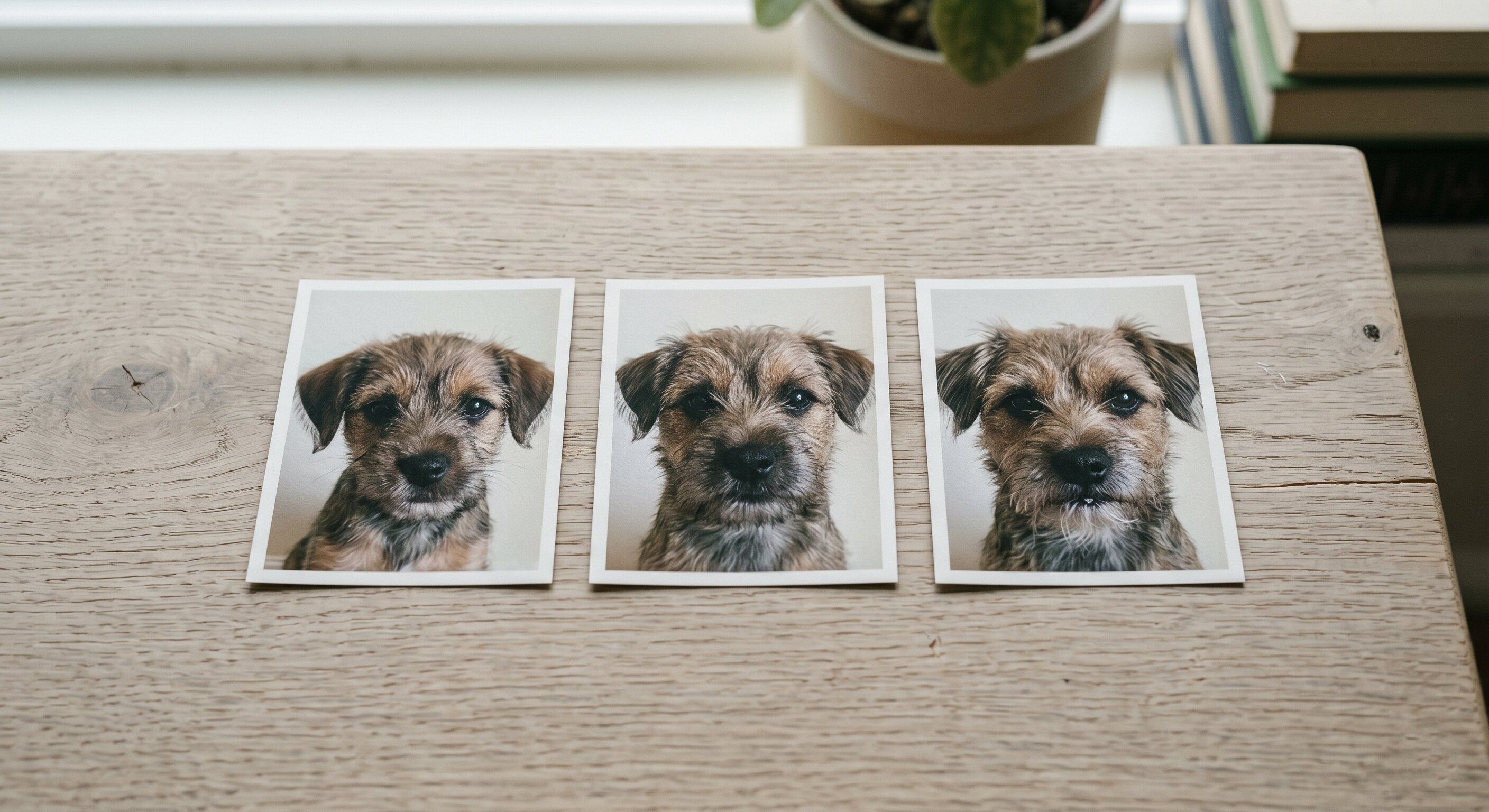
The face — eye area, muzzle, and any folds where the dog has folds. The coat — overall first, then specific spots (the back, the flanks, the belly, the neck where the collar sits). The paws — the pad surface and the webbing between toes. The ears — when the dog is calm, the inside of the ear flap visible.
Alongside the photo, a quick note at the same time — what’s caught your eye, what’s stayed the same, what feels different even if you can’t quite name it. Three entries in, the photo carries what you can see, and the note carries what you feel — what the eye still tracks even when the daily picture has gone background.
Practical rather than prescriptive. The dog is usually calmest somewhere specific (after a walk, before dinner, on a familiar mat) — use that. Same window if you can hold it; same direction of light. The photos that catch what’s there are the ones you take when the dog isn’t performing for the camera. This is what parents are already doing, not a TENDS-prescribed regimen. People who try it and watch it work are where it came from.
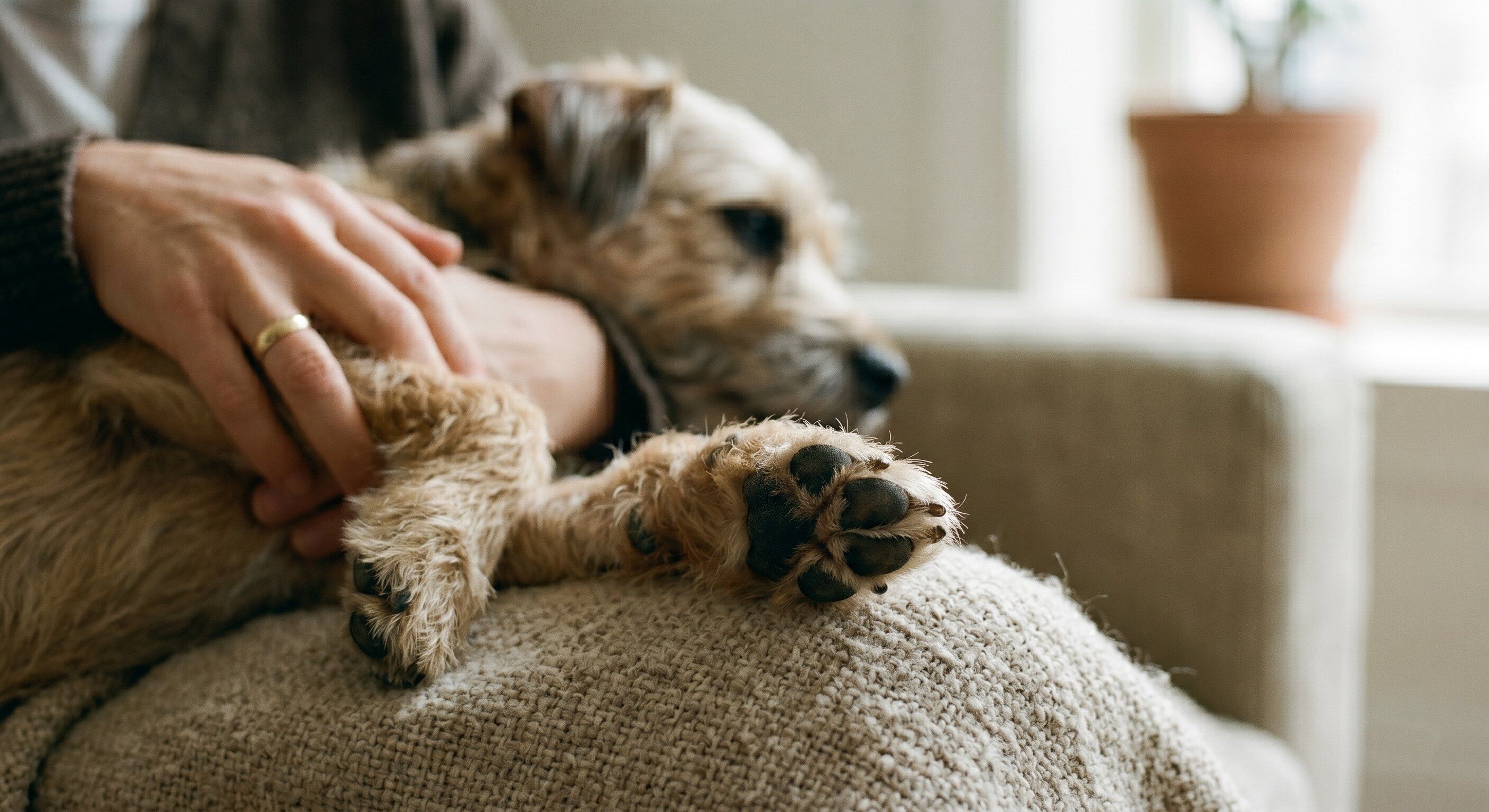
After three months, lay them side by side. What shows up is the change daily attention couldn’t hold. If something has been quietly improving — the coat looks fuller in spots, the paw webbing looks calmer, the eye area has cleared — you’ll see it before you’d otherwise have noticed. If something has been quietly worsening, you’ll catch it earlier than the next vet visit would have.What the comparison shows is rarely dramatic. More often it’s quietly significant: a coat that filled in over six weeks of a food change you’d half-forgotten about; a tear stain that’s a third smaller than the photo three months ago even though the daily appearance felt unchanged; a paw web that’s stopped looking inflamed but you couldn’t tell exactly when the inflammation went; an ear that’s been quietly carrying low-grade redness you’d stopped registering. The photos hold what was built up; watching her gives the change back to you.
If the comparison shows up something sudden — a quick change between two months, a sign running alongside tiredness or loss of appetite, or a shift in how she’s acting, a pattern that doesn’t fit the slow drift this is for — that’s a vet visit, and it’s the right place for it. Watching her catches the slow change. The vet handles what that change turns out to be.
Where TENDS sits in this question
TENDS Touch — the eye, nose, and paw balms — sits on the surfaces the photo comparison catches. Not as the thing watching her is meant to route you toward; watching her has its own value whether or not anything follows from it. But the surfaces the photos read are the surfaces TENDS Touch supports as daily care, and many parents who watch this way find that the daily care has been quietly answering some of what the photos would otherwise have surfaced.
What three months will give you back
The dog has been telling you. You have been seeing — the system was quietly working against the seeing landing as memory. Once you’re watching this way, the seeing builds up. Three months in, the comparison shows you what you’ve been carrying without realising — what cleared, what didn’t, what’s quietly returning, what the dog has been keeping you company through.
Read the dog. Not the chart. The chart in this case was the daily-attention loop. The reading is what you can build alongside it.
Written by the TENDS Nutrition & Research Team
Built within the TENDS small-breed formulation and behavioural framework


Big Brand? No.
A Smaller One — On Purpose.
Stay close for bold new moves in small-breed care.
RESET