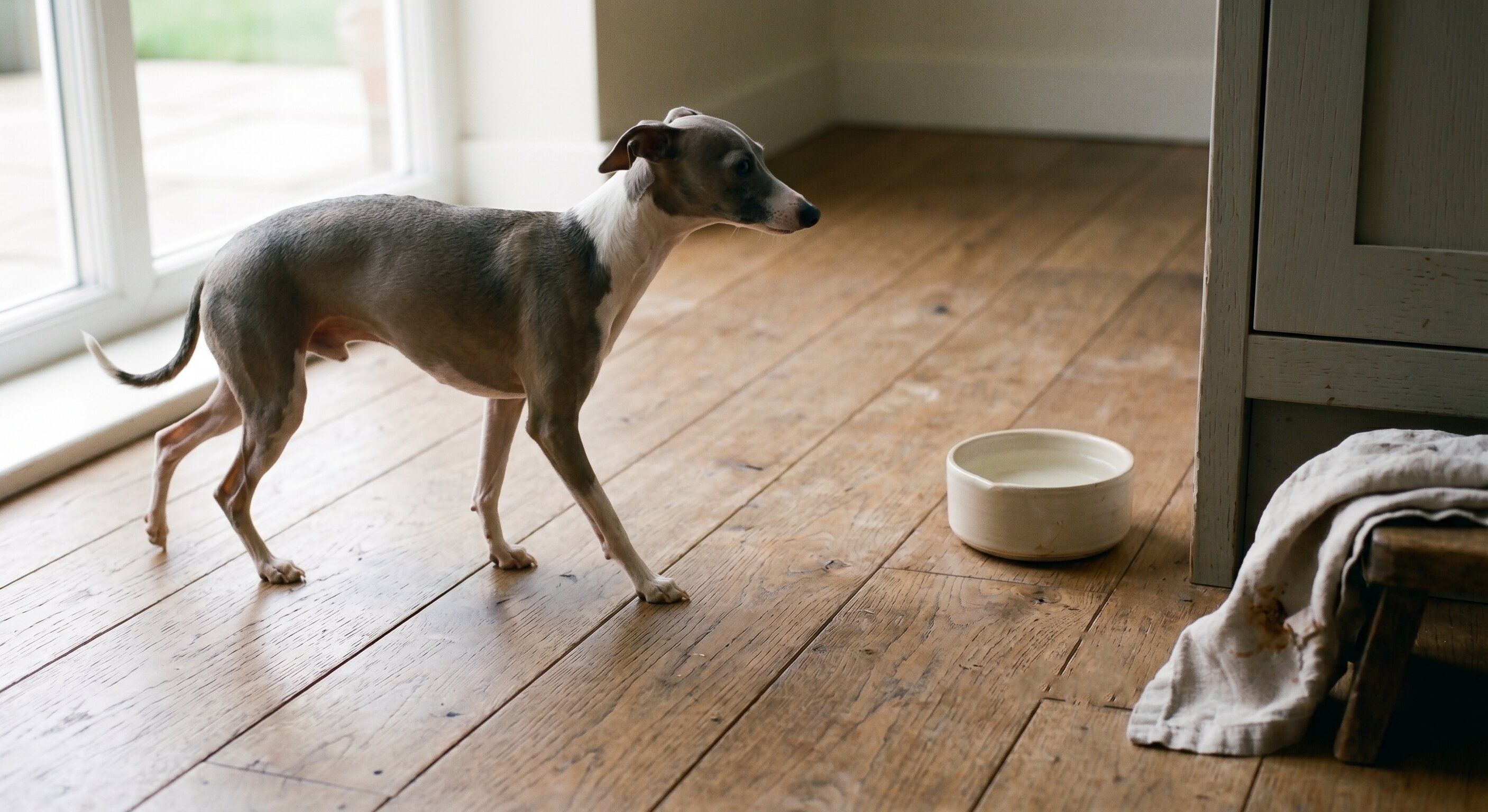
When the skin gets dry, water isn’t usually the answer
A parent in a small-breed forum describes something other parents have said in different ways for years: the dog has dry skin. The first move is more water — more drinking, a switch to wet food, a splash of broth, extra bowls left down. The dog drinks more. The skin stays dry.
Two months in, the dryness hasn’t moved. The thing that brought her here — dry skin? She needs more water — walked past where dry skin actually lives.
Why is my small dog’s skin dry?
Skin reads what’s happening right where it sits, not what’s in the bowl. The outer layer — the stratum corneum — is built from cells stacked between thin layers of fat, with an oily film on top that slows water from evaporating off. Skin doesn’t behave the same everywhere on her. Three things sit underneath most dryness in a healthy adult dog: where it is (the dryness sits somewhere); whether the wet stays on her or just touches her; and what’s been done to the skin (scrubbing too hard wears it down).
Will more water fix my dog’s dry skin?
Usually not — and dry skin = drink more walks past where dry skin actually lives. Hydration runs through her whole body; dryness reads the patch of skin it’s sitting on. Water that comes in through her gut takes a long route, and most of it never reaches that outer layer. Drinking more changes how much she pees, clearly enough. It barely touches local dryness — and only when she was actually dehydrated in the first place.
What actually helps with dry skin in small dogs?
Look at where it is first. “Her skin is dry” usually turns into a specific spot once you actually look — paws, belly, around the muzzle, between the toes. Where it is tells you what’s wearing the skin down there. Get her bath rhythm right for her — too often and too rarely both hurt. Watch whether the wet stays or leaves — the thing that matters isn’t whether she gets wet, it’s whether the wet leaves.
Where skin moisture actually comes from
Skin holds onto moisture differently from how the body holds water. The outer layer of skin — the stratum corneum — is built from cells stacked between thin layers of fat, the way bricks sit in mortar. The mortar is what holds the water in place. The bricks carry their own water, too. Oil from glands across the surface adds a film on top that slows water from evaporating off.
This is local — it happens right at the skin, and it’s different from spot to spot. Paws are built differently from the belly. Folds trap a different little climate than the top of her back. The skin around her eyes lives in a different world than the skin under her collar. Skin doesn’t behave the same everywhere. The research backs it up; the dog you live with proves it.
The dryness the parent is reading is happening right here — at the bricks-and-mortar layer. What changes that layer is what reaches it. Water that comes in through the gut takes a long route, and most of it never reaches here.
What dry skin is actually telling you
Dry skin reads the patch of skin it’s sitting on. Three things sit underneath most of what gets called dry skin in healthy adult dogs. First: where it is. The dryness sits somewhere — paw pads, belly, around the muzzle, between the toes. Where it is tells you what’s wearing the skin down there. “Her skin is dry” usually turns into a specific spot when you actually look.
Second: whether the wet stays, not whether it touches. Getting wet for a moment and staying wet are two different things for the skin. A bath followed by proper drying is one thing — wet that stays is another, between toes, in folds, under bedding. The thing to watch isn’t whether she gets wet; it’s whether the wet leaves.
Third: what’s been done to the skin. Scrubbing too hard wears it down. Bathing her every day with detergent changes the mix of microbes living on her skin; 4% chlorhexidine has been shown to dry the skin out more and let it lose water faster¹. The very thing meant to fix the dryness can make it worse.
Where the first lever sits
Three things to keep in mind.
Read the zone, not the dog. “Her skin is dry” usually turns into a specific spot when you actually look. Where it is tells you what’s wearing the skin down there. Pads get worn by what they touch and rub against. Folds get worn by wet that stays trapped. Bellies get worn by what they’re resting on. Different inputs, different reads.
Watch the moisture pattern. Whether the wet stays is the thing that matters. The bath isn’t the problem; the wet that stays is. The fold isn’t the problem; what gets trapped inside it is.
The first lever is local. Reach for something at the spot itself — a bath rhythm set to her and the season, the dryness of the air around her. What the food is reaching her skin with — what the SHINE blend supports from the inside — is the second thing to reach for, and it earns its place if the bath and topicals haven't moved the dryness in three to four weeks. This is what parents are already doing, not a TENDS rule — the order comes from where the biology actually runs.
If the dryness comes on fast — sudden, with sores, signs of infection coming back, redness or scratching getting worse — that’s vet territory. This is for slow, steady dryness in a dog who’s otherwise well. The rest belongs with the vet.
Where TENDS sits in this question
TENDS Touch is the product family the first lever asks for — care right at the spot where the dryness actually lives. Three zones. Structured properly. For the second lever, when what the food’s delivering is part of what the surface is reading, Hydration Ritual SHINE supports the whole-body side of the skin and coat. The order matters: local first, internal second.
What changes when the question changes
The parent who arrived at “dry skin? She needs more water” arrived through care. The category answer fits the question’s shape. The question was the wrong shape.
The first lever sits at the spot, not at the bowl. Read the dog. Not the chart. The dog has been telling you which spot the whole time.
Sources
1. Matsuda A, Nakamura Y, Itoi T, et al. (2025). Daily topical application of chlorhexidine gluconate to the skin in dogs and its impact on skin barriers and cytotoxicity. Journal of Veterinary Medical Science, 87(3), 257–262. https://doi.org/10.1292/jvms.24-0311
Written by the TENDS Nutrition & Research Team
Built within the TENDS small-breed formulation and behavioural framework


Big Brand? No.
A Smaller One — On Purpose.
Stay close for bold new moves in small-breed care.
RESET