When chicken becomes the problem — most common protein in commercial small-dog food
You’ve been reading the same answer in different threads. Different breeds, different forums, different years. Months of careful watching. Eventually, chicken out. Often, things settle.
The pattern isn’t coincidence. The most common small-dog protein is also one of the most common small-dog allergens.
This is a conversation we’ve been watching on small-breed parent forums for years. Different breeds, different parents, different threads, different years — same thing. The dog itched through chicken-based food for months. Eventually, chicken out. Often, things settled. Small-dog communities that don’t talk to each other have been arriving at the same answer through long watching.
We’re saying something now because the pattern is real, and the evidence underneath it is solid. Chicken sits at the top of two different surfaces: the most common protein in commercial small-dog food, and one of the most common proteins in clinical food allergy work. Same protein. Two surfaces. The overlap isn’t coincidence.
Could my dog be allergic to chicken?
Sometimes. Cutaneous adverse food reactions in dogs (cAFR) are an established clinical entity, and chicken is one of the most common triggers across published studies¹. What parents keep seeing across breed forums tracks the data the literature has been measuring separately. That said, not every itch is food, and not every food itch is chicken. The diagnostic standard is a restrictive-diet trial — and the trial is what tells you, not the symptom alone.
How long does it take to know if chicken is the problem?
Weeks, not days. More than half of dogs with food-responsive cutaneous disease in published studies need over four weeks of restrictive diet before scores meaningfully shift². Two to three months is a more honest window. Don’t decide a protein at three days. Don’t decide it at three weeks if other things haven’t started moving. The skin trails the gut by weeks; reading too early reads what hasn’t arrived yet.
What do I switch to if chicken is out?
Different protein, different gut conversation. Hydrolysed and novel-protein diets are the diagnostic standards; which non-chicken option fits a small-dog body specifically is the longer answer. Plants can carry proteins to a small body in ways the smaller intake rewards. The full answer runs past what’s here.
What’s actually happening
Cutaneous adverse food reactions are real. The data is solid: cAFR is a recognised clinical entity, skin dysbiosis with Staphylococcus dominance shows up alongside cAFR-related atopic dermatitis, and chicken is one of the most common triggers across published studies³. The mechanism is the gut-skin axis — general canine biology applied to a small-breed audience, not small-breed-exclusive, per the evidence.
What the breed forums show is parents reading the same data the literature has been measuring separately. Chicken-based food has been arriving in small-dog bowls for years; chicken-related food allergy has been turning up in clinical stuides for years. Same protein, two surfaces. Different surfaces, same pattern.
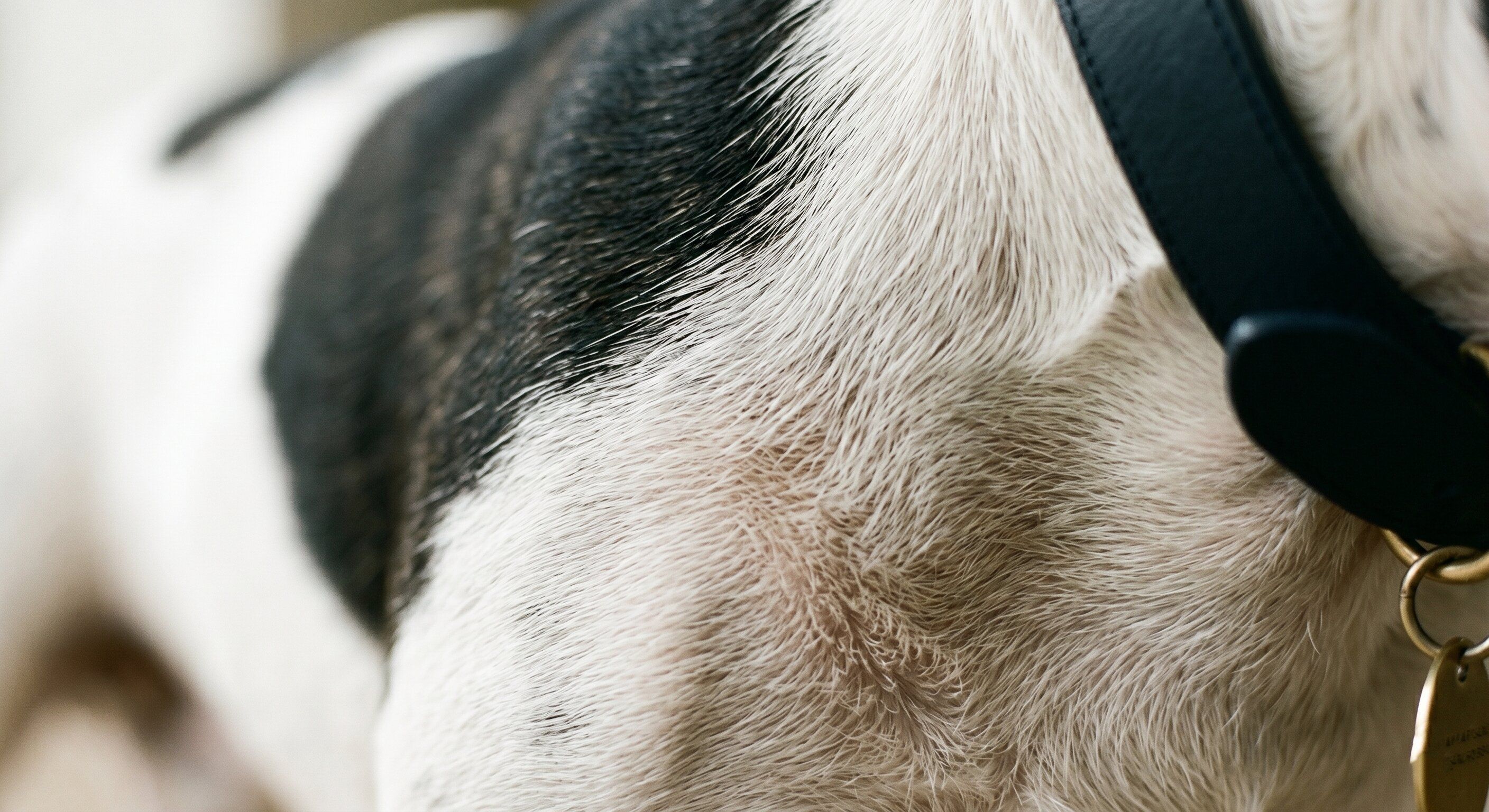
How long it takes to know
The diagnostic standard is the restrictive-diet trial — elimination diet or hydrolysed protein — held for long enough to read⁴. Lewis 2025: more than half of dogs with food-related skin reactions — with or without skin allergies alongside — need more than four weeks of restrictive diet to show meaningful improvement.
Weeks, not days. When the protein has to change, the gut quiets first. The skin follows. Two to three months is the window where you can finally read the change. The first three weeks may show nothing — that's not a failed trial, that's a gut that hasn't finished processing what it was holding. Switching to a broken-down or entirely new protein has its own nuance: some dogs still react even then⁵ — the framing is different protein, different gut conversation, not problem solved.
What that looks like in TENDS’ system
The Superfood Blend was built around a different protein architecture — not because plant is better, but because what fits inside a smaller intake matters more. The full answer to what fills the chicken-shaped hole is the longer Card J piece. TENDS Touch supports the local barrier through the months it takes for the gut to settle.
The body keeps no record of the bag
What you’ve been reading on the forums is what your dog has been showing you at home. The overlap is real; the timeframe is real; the evidence is real.
The body keeps no record of the bag — only of what arrived, and how long it kept arriving.
Sources
1. Hensel P, et al. (2024). Update on the role of genetic factors, environmental factors and allergens in canine atopic dermatitis. Veterinary Dermatology. https://doi.org/10.1111/vde.13210 2. Jackson HA (2023). Food allergy in dogs and cats; current perspectives on etiology, diagnosis, and management. Journal of the American Veterinary Medical Association, 261(Suppl 1), S23–S29. 3. Lewis et al. (2025). Time course of clinical response to elimination diet in dogs with cutaneous adverse food reactions. Veterinary Dermatology. 4. Thomsen M, Künstner A, Wohlers I, et al. (2023). A comprehensive analysis of gut and skin microbiota in canine atopic dermatitis in Shiba Inu dogs. Microbiome, 11, 232. https://doi.org/10.1186/s40168-023-01671-2 5. Olivry T, Bizikova P (2010). A systematic review of the evidence of reduced allergenicity and clinical benefit of food hydrolysates in dogs and cats. Veterinary Dermatology, 21(1), 32–41. https://doi.org/10.1111/j.1365-3164.2009.00761.x
Written by the TENDS Nutrition & Research Team
Built within the TENDS small-breed formulation and behavioural framework


Big Brand? No.
A Smaller One — On Purpose.
Stay close for bold new moves in small-breed care.
RESET